
Bayley-4
Bayley Scales of Infant and Toddler Development, Fourth Edition
A broad assessment of learning, language, movement, social-emotional development, and everyday adaptive skills.



Developmental evaluations
Whether you’re following up after a NICU stay or wondering about a milestone, a developmental evaluation can help you understand your child’s skills and where support may be helpful.
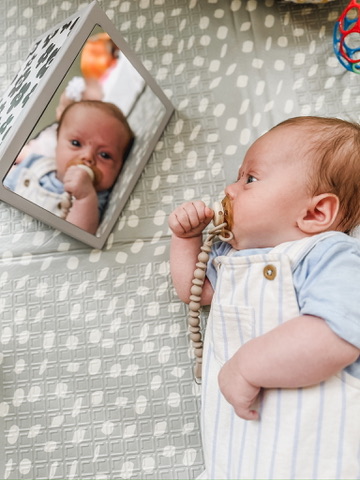
Our approach
You may be noticing a skill that hasn’t emerged yet, an uneven pattern, or a change you want to understand. We start with your child’s history and what you’re seeing at home.
Our licensed therapists use standardized measures alongside observation and your input to make sense of your child’s development. We select tools based on their age and the questions you bring; you don’t need to choose a test before reaching out.
 Review developmental history, everyday routines, and your concerns Observe skills through age-appropriate activities and standardized assessment Explain findings in language that makes sense for your family Discuss whether monitoring, therapy, or further evaluation may be helpful
Assessment tools
These tools answer different questions. A screening offers a brief look at key skills; a comprehensive assessment explores development in more detail.
Bayley Scales of Infant and Toddler Development, Fourth Edition
A broad assessment of learning, language, movement, social-emotional development, and everyday adaptive skills.

Peabody Developmental Motor Scales, Third Edition
A focused assessment of gross and fine motor development, including body control, movement, hand skills, and eye-hand coordination.

A brief developmental screening
A shorter look at cognitive, language, and motor skills to help determine whether a more comprehensive assessment may be useful.
When families reach out
Families may come with a pediatrician’s recommendation, a NICU follow-up question, or simply something they want to understand.
From results to next steps
Standardized results help describe current skills and provide a baseline for tracking change. We interpret them alongside your child’s history, observations, and everyday experiences.
We’ll talk through strengths, areas that may need support, and what the findings mean for your family. Recommendations may include monitoring, therapy, or follow-up with your pediatrician or another specialist.
Explore infant occupational therapy →Start with a conversation
You don’t need to choose an assessment or have a diagnosis before contacting us. Tell us about your child and the questions you’d like help answering.